Story, vocabulary, rhythm, boundaries, content, and commercial rules.
We audit existing prompts, scripts, and real conversation examples before building the configuration.
One-model pilot
Start with one model and one channel. We configure the creator, give your team a private place to challenge the voice and sales behavior, then launch under human control and automate only what proves itself.
Pilot scope
This is not a generic chatbot with a name added. The exact schedule and commercial scope are agreed after the initial review.
We audit existing prompts, scripts, and real conversation examples before building the configuration.
Try memory, objections, negotiation, awkward questions, content selection, and recovery. We tune what does not feel right.
FanLTV carries context and routine work across shifts while people retain valuable, unusual, and sensitive decisions.
Rollout path
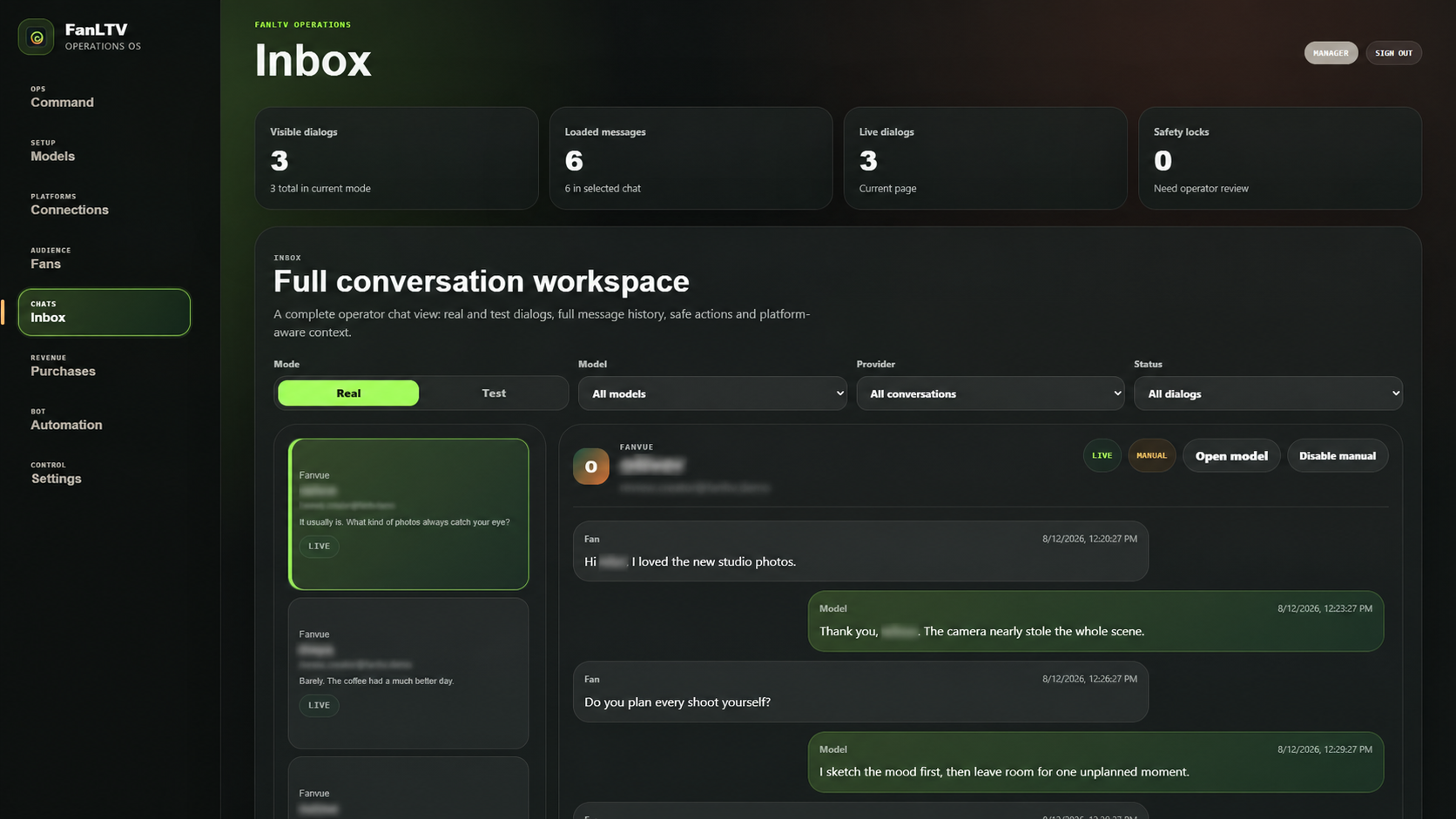
Real workspace, supervised rollout
The pilot uses actual channel behavior while preserving manual control, visible delivery state, and an accountable history of what the system did.
Review production evidencePilot report
A useful pilot closes with operational and commercial evidence, not only a list of generated messages.
Inbound coverage, unanswered recovery, proactive eligibility, delivery success, duplicate prevention, and human exceptions.
State progression, memory use, language consistency, repetition, offer timing, safety handoffs, and operator corrections.
Payment outcomes, repeat purchases, reactivation, operator hours, provider/AI costs, and expected LTV impact where the data supports it.
Typical pilot
The standard package gives agencies a planning baseline. The final proposal is capped in writing after the channel readiness check.
Implementation and supervised pilot. Taxes and third-party services are not included.
Request a fixed capThis is a non-binding planning range for the standard scope, not a universal tariff. High-volume accounts, Meta approval work, or custom provider development are quoted separately before work begins.
Request the pilot
We will contact you to confirm the channel, access method, baseline, and safest starting mode.