State and tone engine
Tracks relationship phase, engagement, tension, spend intent, buyer style, consent, and the next commercial objective.
The operating layer
FanLTV connects provider events, relationship state, memory, media, pricing, safety, delivery, and operator actions around each model and fan.
The decision path
The system can wait, flirt, recall, sell, negotiate, recover, or hand the conversation to a person.
Webhooks, listeners, catch-up sync, message bursts, media, tips, subscriptions, and unlocks.
History, language, sentiment, buyer style, safety, facts, media intent, and spend signals.
Rapport, flirt, presell, offer, negotiation, post-purchase, reactivation, or manual review.
Generate the reply, select contextual content, set price, preserve timing, or pause safely.
Store outcomes, purchases, memories, blockers, and the next best action for the relationship.
Product workspace
The same system supports the inbox, content commerce, runtime automation, and multi-model command center.
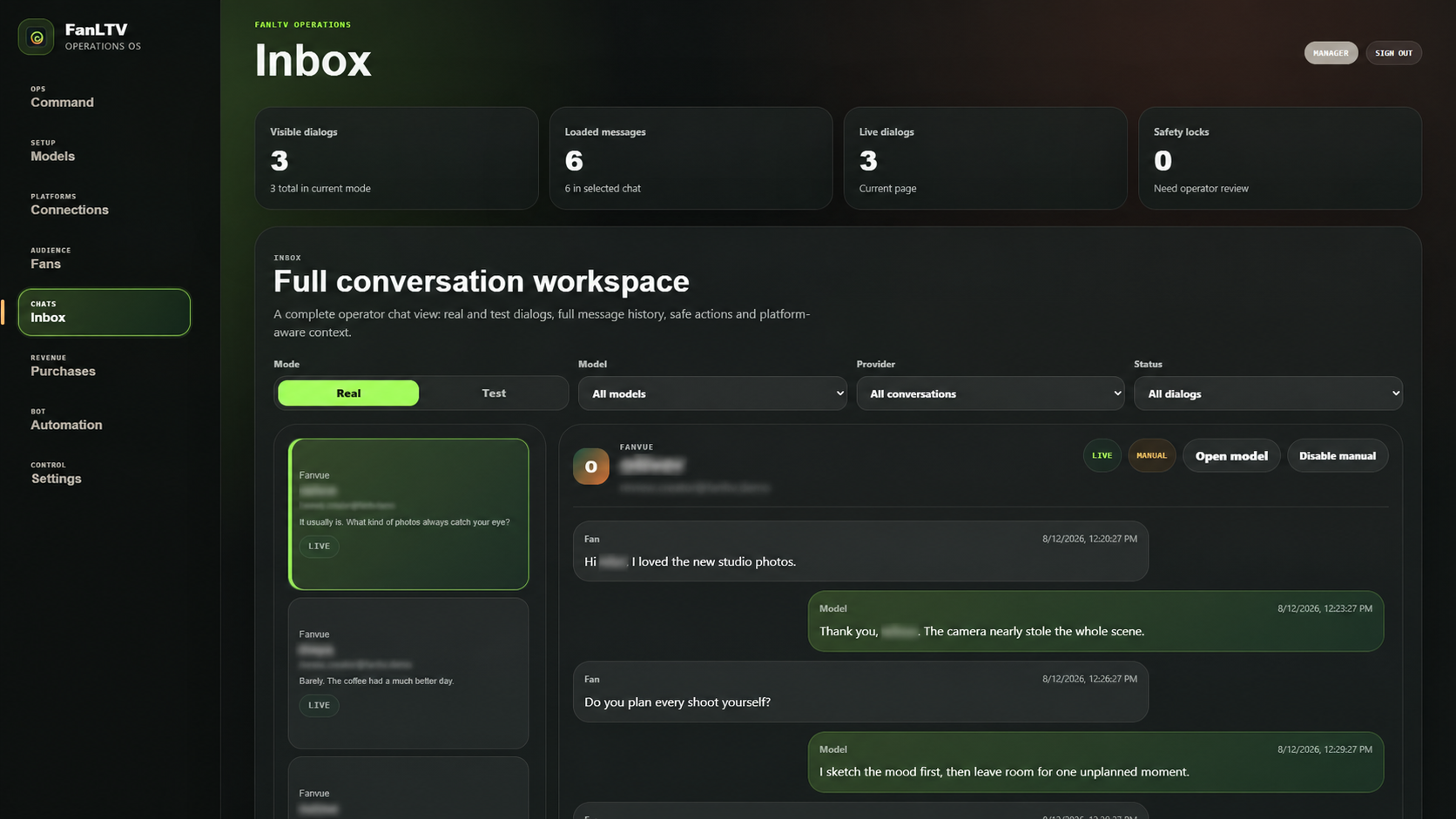
Conversation operations
Filter by model, provider, live state, and safety status. Review message history, current mode, media, purchases, and operator actions without switching tools.
Platform capabilities
Tracks relationship phase, engagement, tension, spend intent, buyer style, consent, and the next commercial objective.
Uses the facts needed for the current reply without flooding every prompt or inventing personal details.
Chooses a relevant script, respects step and media pricing, handles objections, deposits, and post-purchase care.
Reopens quiet conversations from history, reacts to platform events, and applies per-model limits and eligibility.
Syncs or uploads media, describes it, organizes photosets, schedules posts, and preserves lock and preview state.
Role access, balances, plans, cloned configs, prompt permissions, model assignments, and agency-level visibility.
Input and output checks, contextual second review, private-topic recovery, and explicit manual locks that automation cannot bypass.
Idempotent processing, retry queues, catch-up sync, duplicate prevention, health checks, and traceable delivery failures.
Multi-channel by design
FanLTV normalizes messages, media, purchases, events, and delivery status while keeping provider-specific rules where they belong.
Control remains visible
Every model can run in manual, assisted, handoff, or full-auto mode. Safety locks remain explicit. Agencies decide who can edit prompts, manage configs, see logs, or change commercial settings.
One terminology across the product
The operator. FanLTV stores context, media, purchases, and logs without sending automatically.
FanLTV proposes a reply or action; the operator edits or approves it before delivery.
Eligible automation runs until a configured safety, payment, negotiation, or provider condition pauses it for a person.
Validated eligible routines can send after pre-delivery checks. Manual and safety locks still take priority.
Practical questions
FanLTV can begin as an assistant and take on more work only after voice, content, pricing, and safety are validated in real conversations.
It can automate routine conversations, timing, memory, content selection, and recovery. High-value, sensitive, uncertain, or unusual cases can remain in handoff or manual mode.
Because readiness varies. A premature offer can reduce trust and price perception; waiting forever loses intent. FanLTV tracks the state and next commercial objective so the decision is contextual.
Yes. Model bibles, facts, style rules, conditional prompts, prices, custom policies, media scripts, and channel rules are isolated per profile.
Listeners, retries, idempotent processing, catch-up synchronization, and delivery traces are designed to recover missed work without sending the same reply twice.
Logs expose conversation state, effective mode, graph events, safety or manual locks, provider attempts, and blockers instead of leaving silence unexplained.
Start with one model and one channel in manual or assisted mode. Validate voice, memory, content, pricing, safety, and handoff triggers before enabling broader automation.
See the complete workflow